


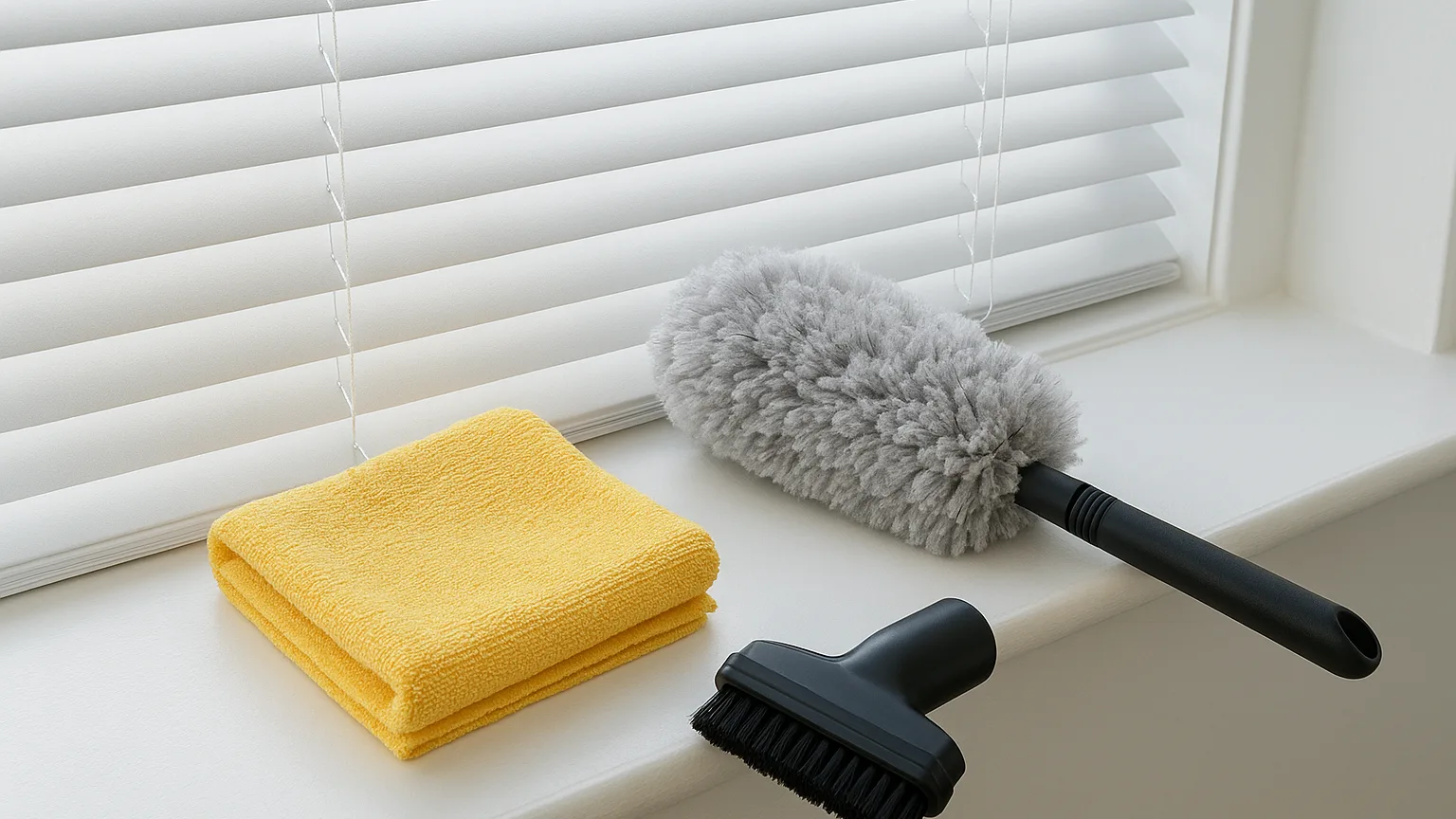
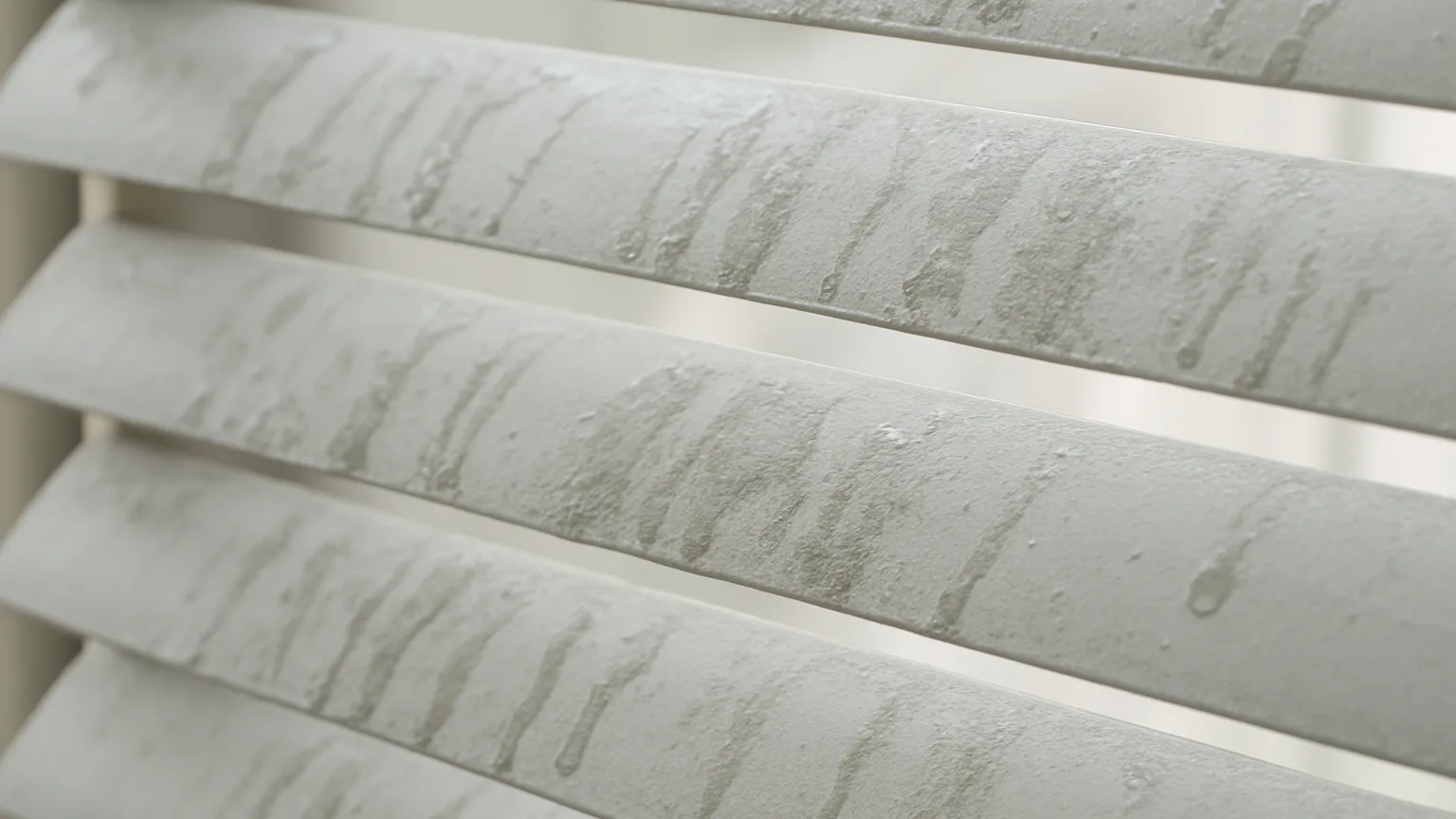
The fastest way to make your blinds look dirtier is the trick almost everyone uses. You wet a rag, pinch a slat, and drag it from end to end. It feels like cleaning. Then you step back and see gray lines, fuzzy edges, and a film on the window behind it.
Here is what is going on. Blind dust is not just dirt. It is a mix of skin flakes, fabric lint, pollen, cooking grease, and fine grit from outside. When it stays dry, it lifts off easily. When you add water first, that dust turns into a thin paste. The rag does not pick it up. It spreads it.
Blinds hang inches from the window. When you wipe them hard, loose dust floats off and settles on the glass. Damp grime flicks onto the pane as the slats snap back into place. That is why so many people say their windows streak right after they clean. The glass was not the problem. The blinds were.
The fix is simple: work dry first, wet second, and glass last. Once the blinds are done, a quick pass with the 10-minute window method gives you clear panes that stay that way, because nothing is left above them to fall down.
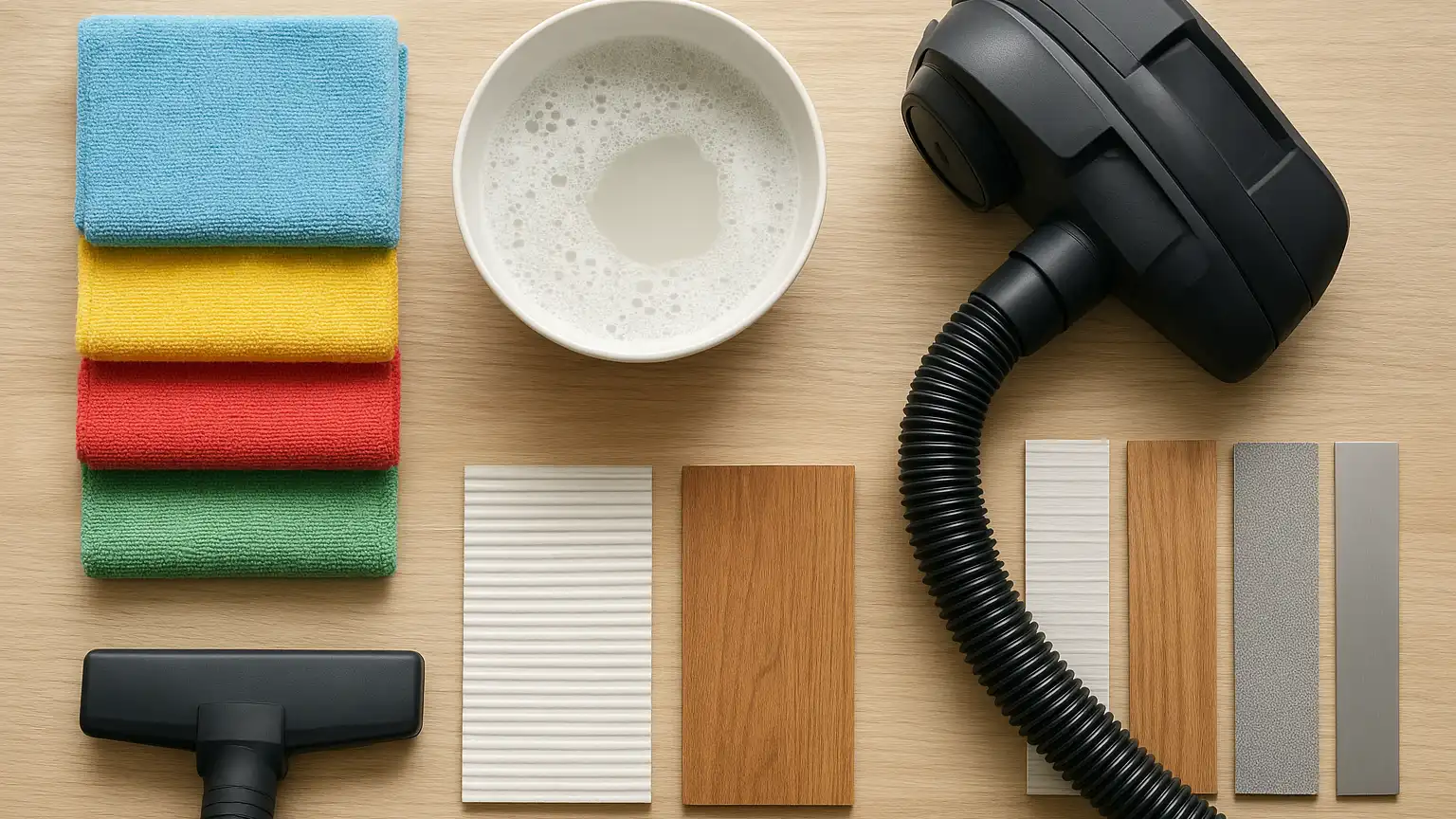
Before you start any blind, grab these basics:
Every blind material reacts to water, pressure, and soap in its own way. The steps below follow the same rule (dry, then damp, then glass), but each one is tuned to what the slats can actually handle.
Vinyl is the toughest of the bunch, which is why people get rough with it. Close the slats flat with the curved side facing you. Vacuum with the brush tool, going from top to bottom. Flip the slats and repeat on the other side.
Now dip a cloth in your soapy water and wring it until it is barely damp. Wipe each slat once, then fold the cloth to a clean side. When you run out of clean sides, grab a fresh cloth. For yellowed kitchen blinds with grease, you can take them down and soak them in a tub of warm, soapy water for 20 minutes. Rinse, shake, and hang them to dry fully before you raise them.
Real wood is where the rag trick does the most damage. Water soaks into the grain, raises fibers, and can warp slats over time. Skip soaking and skip wet cloths. Dust with a dry microfiber cloth or a soft brush, one slat at a time. For sticky spots, use a cloth lightly misted with a wood-safe cleaner, then buff dry right away.
“Most wood blind problems we see come from too much water, not too much dirt,” says Marcus Delgado, senior installation specialist at Rapid Blinds. “A dry microfiber pass once a week keeps the finish looking new for years. Once moisture gets into the grain, you cannot really undo it.”
Faux wood is a little more forgiving. You can use a barely damp cloth on it, but still dust it dry first.
Fabric holds dust deep in the weave, so wiping only pushes it further in. Use the vacuum on low suction with the brush tool. Work top to bottom in slow, overlapping strokes. For a small spot, dab (never rub) with a clean cloth and a little cold water. Test any cleaner on a hidden corner first, since some fabrics spot or fade.
If your fabric blinds have stains that will not lift, or they smell like smoke or pets, do not try a full wash at home. Many have glued seams or stiffeners that fall apart in water.
Thin aluminum slats bend if you look at them wrong. Pinching them with a rag is the fastest way to leave permanent creases. Instead, close the blinds and dust with a long microfiber duster in light, sideways strokes.
For grime, use a cloth that is damp, not wet, and support each slat from behind with your other hand as you wipe. Dry them right after. Water left sitting on aluminum can leave spots and, near the headrail, rust on the hardware.
Most blinds only need a few minutes of dry dusting each week. Still, some jobs go past what a cloth and a vacuum can handle. Doing them yourself can cost more in broken slats than a pro visit would.
While you clean, take a close look at the glass. If you see moisture on the window that does not wipe away, the problem may not be dust at all. Learning to tell harmless fog from a failed seal can save you from scrubbing glass that only a repair will fix. Fog trapped between the panes of a double-pane window means the seal has broken, and no cleaner will touch it.
Dirty blinds also hide things. Water stains on the bottom rail, black specks near the frame, or warped slats right at the window often mean condensation is collecting there. Catch it early and you save the blinds and the window frame.
Not every window cleaner handles blinds, and not every one who says they do knows how to treat wood or fabric. Ask how they clean each material, whether they take blinds down, and what happens if a slat bends. A few smart hiring questions will quickly sort the careful crews from the ones who just bring a bucket and a rag.
A good pro will clean the blinds first and the glass second, every time. If they reach for the glass before the slats, that tells you a lot.
The damp rag swipe feels quick, but it turns dust into paste, moves grime from slat to slat, and drops a mess onto the window you just cleaned. The better way is easy to remember: dust dry first, use only a barely damp cloth where the material allows it, and save the glass for last. Vinyl can handle a soak, wood needs to stay dry, fabric wants a vacuum, and aluminum needs a gentle hand.
Keep up with a weekly dry dusting and your blinds will rarely need a deep clean at all. When grease, height, delicate materials, or moisture make the job risky, bring in a pro who knows the difference between each type. Do it in the right order, and your blinds and your windows will finally look clean at the same time.


