


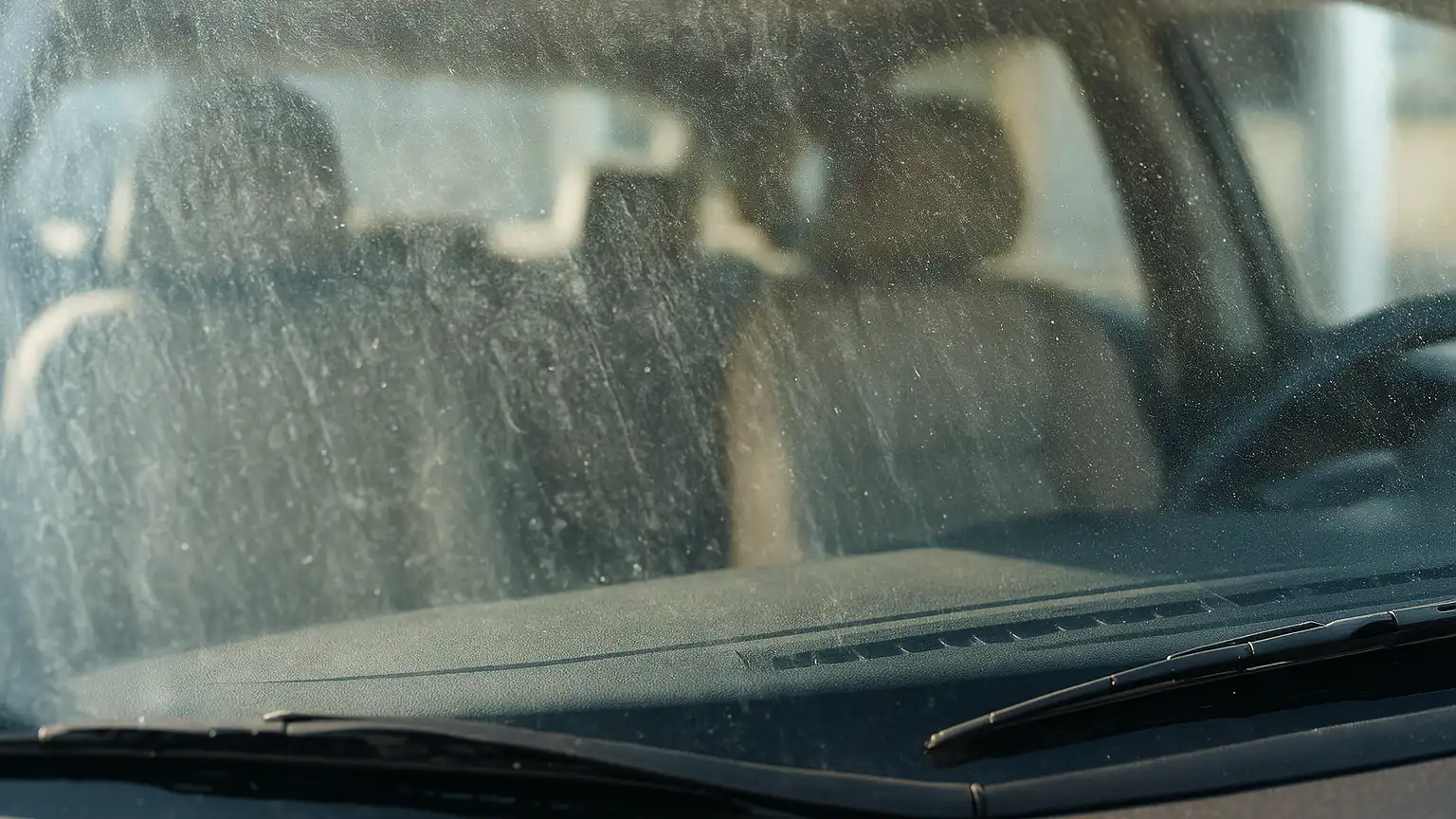
You wipe the inside of your windshield. It looks clear. Then the sun hits it at 5 p.m. and you see a gray, greasy haze across the whole thing. You wipe again. Now there are swirls.
That haze is not road dust. It comes from inside the car. Your dashboard, seats, and door panels are made with soft plastics and vinyl. When the cabin heats up, they release oily vapors that stick to the coolest flat surface nearby, which is your glass. Pros call it off-gassing film, and it builds up week after week even if you never touch the window.
Other sources thicken the layer fast:
This film is also why your windshield fogs so easily. Water droplets grab onto oily spots and spread into a cloudy sheet, while clean glass fogs less and clears faster.
Wiping makes it worse because most household glass sprays are made to lift dust and fingerprints, not break down oily film. Your towel just spreads the oil thin, and that thin layer catches light as streaks. A towel that's already a little dirty adds the grime it picked up last time.
New glass has its own version. A freshly installed windshield often carries adhesive haze and polish residue, and cleaning glass after a replacement calls for a slightly different approach than a weekly wipe.
"Nine out of ten cars I clean have a film nobody can see until the sun is low," says Marcus Delgado, a window cleaner with 14 years on the job. "People think they're bad at cleaning. They're just fighting the wrong enemy."
Home and car windows share many rules. If you know the 10-minute window method, you know order and towel choice matter more than effort. Auto glass just adds tight angles and that sneaky dashboard film, which forms the same way on factory and replacement glass, so the OEM vs aftermarket choice won't spare you from it.
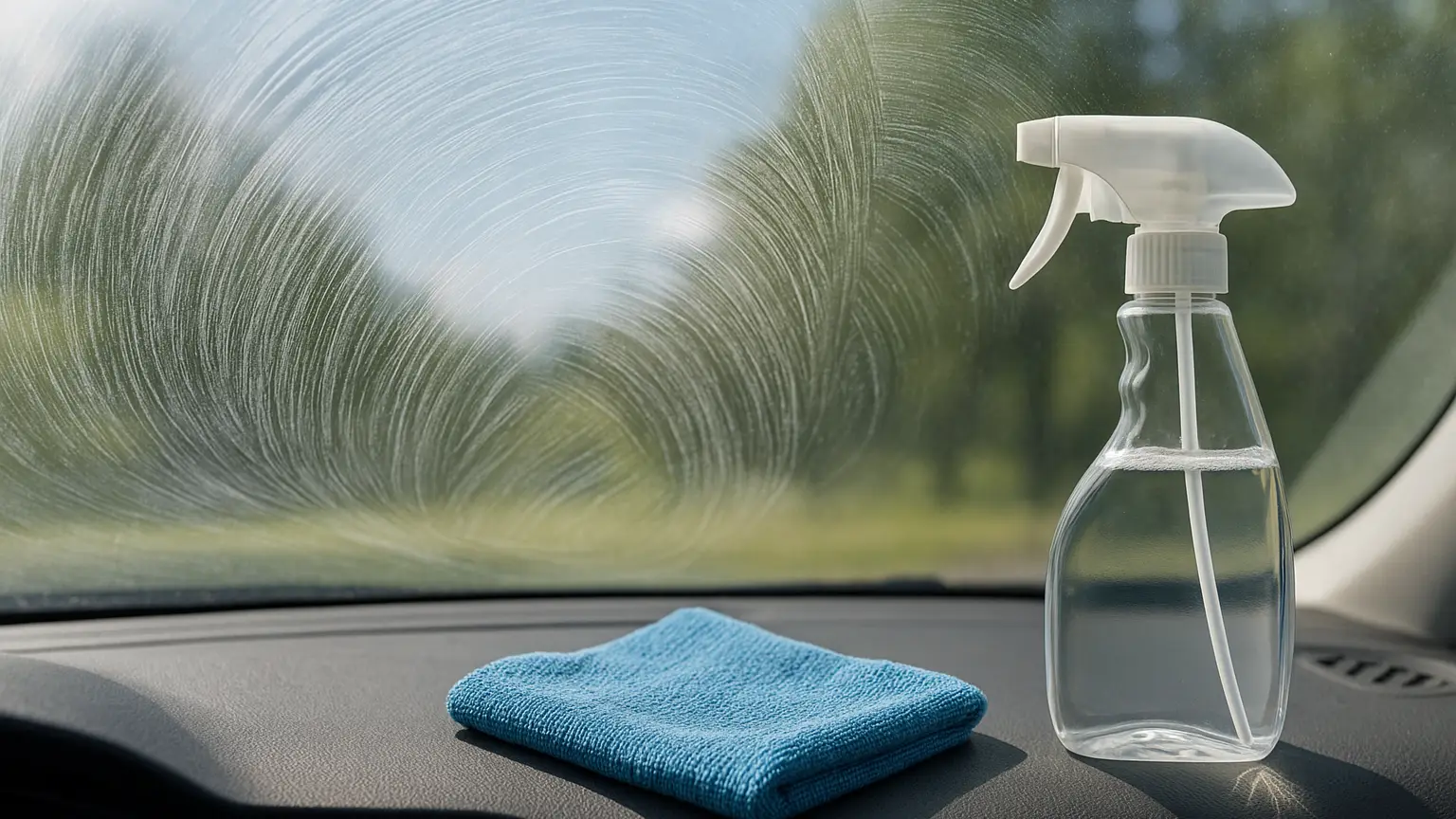
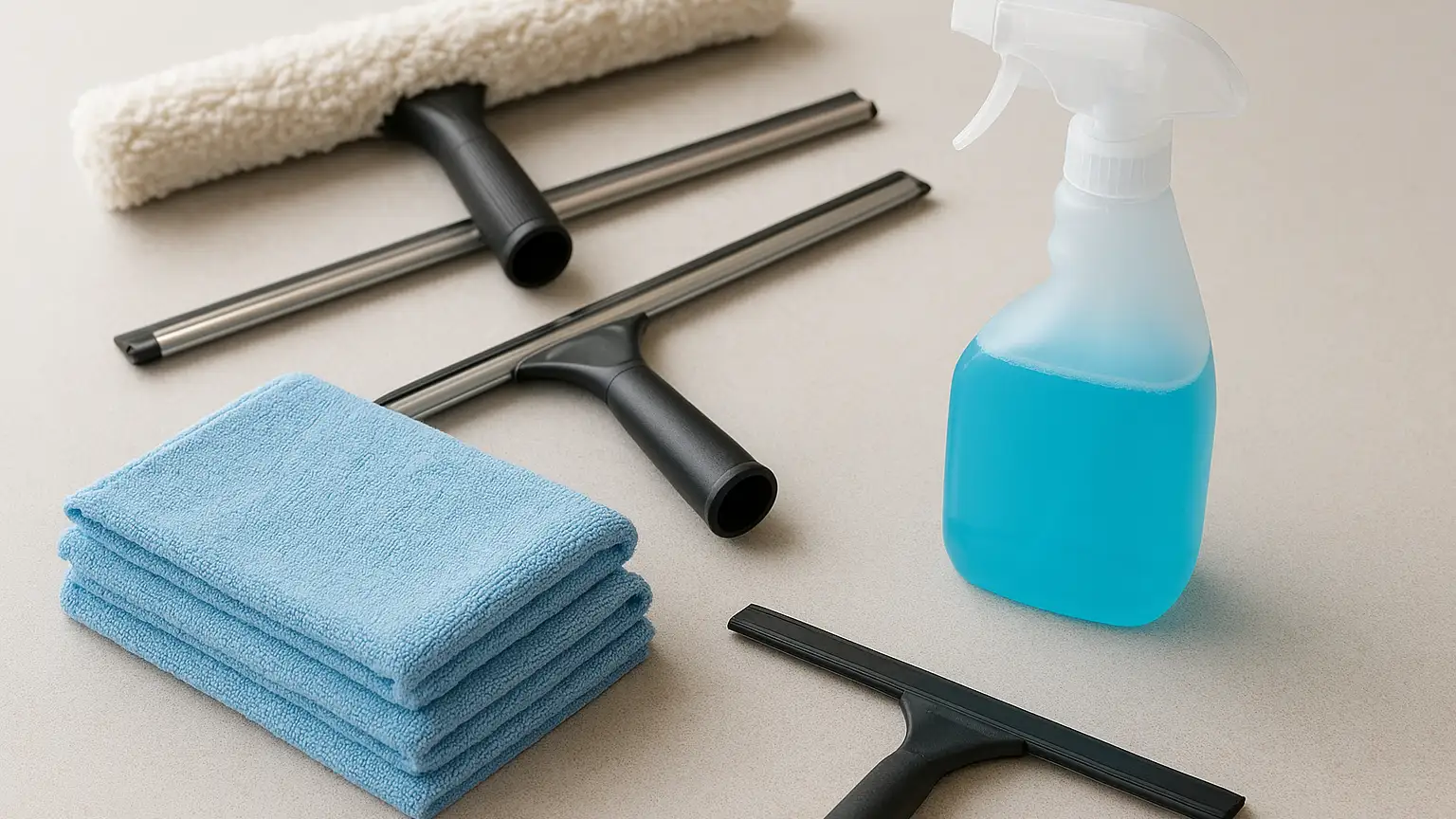
You don't need a cart full of products. Pros keep the kit short on purpose, because every extra product is one more thing that can streak.
Use microfiber with a short, tight weave. "Glass" towels have a smooth, almost flat feel. Keep at least two clean ones per car, and wash them on their own with no fabric softener or dryer sheets, which coat the fibers with a waxy layer that ends up on your glass.
A dirty towel is the top cause of streaks. Like the damp-rag mistake people make when cleaning window blinds, it only moves the mess around. If a towel has touched wheels, the dash, or anything greasy, retire it from glass duty.
For the first pass on a filmy windshield, many pros spray a mix of half isopropyl alcohol and half distilled water. Alcohol breaks down the oil, and mineral-free distilled water dries without spots. For regular upkeep, an ammonia-free auto glass cleaner works well. Skip ammonia inside, since it can harm tint and dry out rubber and plastic trim. Skip dish soap too, which leaves a slick coating that grabs dust.
"I tell people to spend their money on good towels, not fancy spray," says Renee Walsh, who runs a small mobile cleaning crew. "A clean towel with plain alcohol beats a dirty towel with the best cleaner on the shelf."
Work in the shade with cool glass. Hot glass dries cleaner before you can wipe it off, leaving streaks every time. If your windshield was just installed, ask the shop how long to wait before pressing hard on the inside, since adhesive cure time is part of a proper windshield replacement. Dust the dash and vents first so dirt doesn't fall onto clean glass.
Spray the towel, not the windshield, so mist doesn't land on the dash and mix with the film. Fold your first towel into quarters for eight clean sides. Wipe in small sections with firm, overlapping strokes, flipping often. Go side to side inside and up and down outside, so a later streak's direction tells you which side it's on.
Then buff each section right away with a second, fully dry towel until it squeaks a little. This picks up leftover oil and moisture. Check from the driver's seat at a low angle, the way the evening sun will hit it.
Heat speeds up off-gassing, so a sunshade helps a lot in summer. Sun is hard on glass in other ways too. Chips and cracks spread faster in desert heat, which is why many people rely on mobile windshield crews in Scottsdale and similar cities for repairs at home.
Cracking a window now and then lets vapors out before they settle, and wiping the inside glass every two weeks keeps the film too thin to see. If you hire a detailer, ask how they handle interior glass and what products they use. The idea behind five questions that expose a weak window cleaner works for detailers too.
The haze isn't a sign you clean badly. It's a film your own car makes, joined by skin oil, breath, and vent dust, and regular spray with a used towel only spreads it thinner. Use clean, softener-free microfiber, a half alcohol, half distilled water mix, and two towels: one to clean, one to buff. Work on cool glass, spray the towel, and check at a low angle. Add a sunshade and a wipe every couple of weeks, and your windshield will stay clear when the sun drops low and you need it most.


